Acceptance and Commitment Therapy (ACT) is a modern, evidence-based psychological therapy that helps people develop a healthier relationship with difficult thoughts, emotions and experiences rather than trying to eliminate them. The goal is to increase psychological flexibility—the ability to stay present, accept what cannot be controlled, and take meaningful action aligned with your values.
ACT was developed in the 1980s by psychologist Steven C. Hayes and is now widely used to treat addiction, anxiety, depression, trauma, chronic pain, eating disorders and many other mental health conditions.
The Core Philosophy of ACT
ACT is built around a simple but powerful idea:
You don’t have to get rid of painful thoughts or feelings before you can build a meaningful life.
Many traditional approaches focus on changing negative thoughts. ACT acknowledges that painful emotions are a normal part of being human. Instead of fighting them, ACT teaches you how to respond differently so they no longer control your behaviour.
For someone in recovery, this means learning to experience cravings, fear or shame without automatically turning to drugs or alcohol.
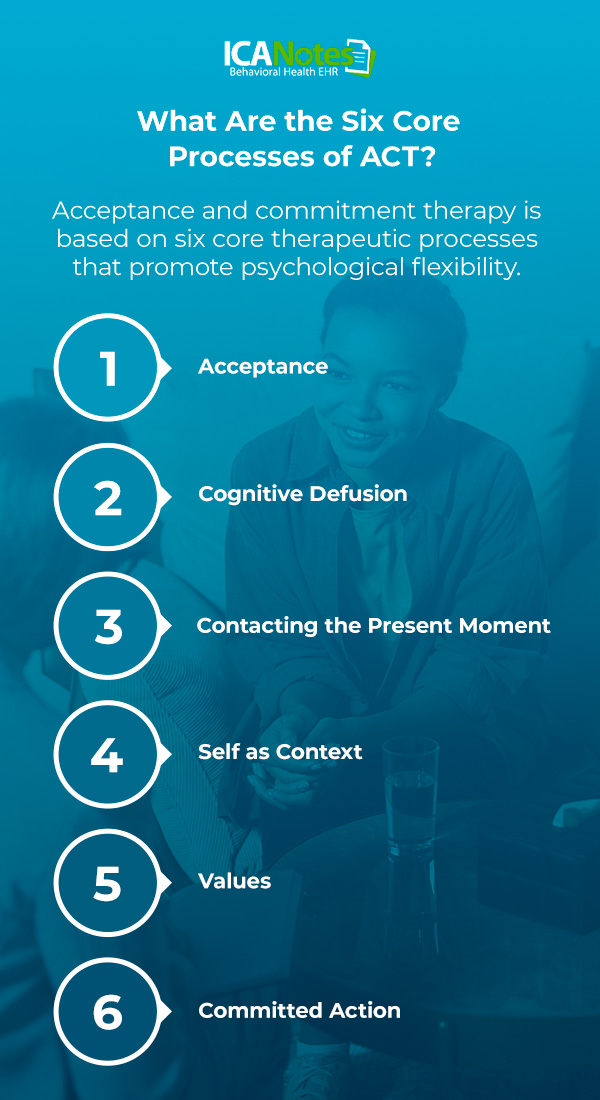
The Six Core Processes of ACT
1. Acceptance
Acceptance means making room for uncomfortable emotions instead of avoiding or suppressing them.
Rather than saying:
“I can’t cope with this anxiety.”
ACT encourages:
“I can allow this feeling to be here without letting it control my choices.”
Acceptance isn’t giving up. It’s stopping the struggle against experiences that cannot be changed.
2. Cognitive Defusion
Our minds constantly generate thoughts. ACT teaches that thoughts are simply words and mental events—not necessarily facts.
For example:
Instead of believing:
“I’m a failure.”
ACT helps you notice:
“I’m having the thought that I’m a failure.”
This small shift reduces the emotional power of negative thinking.
3. Being Present
ACT emphasises mindfulness and staying connected to the present moment.
Instead of dwelling on the past or worrying about the future, you learn to pay attention to what’s happening right now.
Simple practices include:
- Mindful breathing
- Body scans
- Observing thoughts without judgement
- Grounding exercises
4. Self-as-Context
ACT distinguishes between:
- Your thoughts
- Your emotions
- Your true observing self
You are not your addiction.
You are not your anxiety.
You are the person noticing these experiences.
This perspective creates space for change and self-compassion.
5. Values
Values are the qualities you want your life to reflect.
Examples include:
- Family
- Honesty
- Health
- Kindness
- Adventure
- Creativity
- Service
- Connection
ACT helps people identify what truly matters so recovery becomes about building a meaningful life—not simply avoiding substances.
6. Committed Action
Values become meaningful only when translated into action.
Examples include:
- Calling a loved one instead of isolating
- Attending therapy
- Exercising regularly
- Applying for work
- Repairing relationships
- Practising healthy routines
Small, consistent actions gradually create lasting change.
ACT in Addiction Recovery
ACT has become increasingly popular in drug and alcohol rehabilitation because addiction is often driven by experiential avoidance—the attempt to escape painful emotions through substances.
Many people use alcohol or drugs to avoid:
- Anxiety
- Trauma
- Shame
- Loneliness
- Depression
- Stress
- Grief
ACT teaches that while these feelings may still arise, they don’t have to dictate behaviour.
Instead of reacting automatically, people learn to:
- Notice cravings without acting on them
- Accept emotional discomfort
- Make choices aligned with long-term goals
- Build resilience
- Create a life worth staying sober for
What Happens During an ACT Session?
A therapist may guide you through:
- Mindfulness exercises
- Exploring personal values
- Identifying unhelpful thinking patterns
- Learning techniques to separate yourself from negative thoughts
- Setting meaningful goals
- Practising acceptance during difficult emotions
- Developing practical behavioural strategies
Sessions are collaborative, practical and focused on real-life situations.
Is ACT Effective?
A large body of research supports ACT for treating:
- Substance use disorders
- Anxiety disorders
- Depression
- Post-traumatic stress disorder (PTSD)
- Obsessive-compulsive disorder (OCD)
- Chronic pain
- Stress-related conditions
Research suggests ACT can improve emotional wellbeing, reduce relapse risk in addiction recovery, increase resilience and help people maintain long-term behavioural change.
ACT vs Cognitive Behavioural Therapy (CBT)
While ACT and CBT share similarities, they differ in their primary focus.
| Cognitive Behavioural Therapy (CBT) | Acceptance and Commitment Therapy (ACT) |
|---|---|
| Challenges and changes negative thoughts | Changes your relationship with thoughts |
| Focuses on thinking more accurately | Focuses on thinking more flexibly |
| Reduces distress by restructuring beliefs | Reduces distress through acceptance and values-based action |
| Seeks symptom reduction | Seeks a meaningful, values-driven life despite discomfort |
Many rehabilitation centres integrate both approaches because they complement one another.
Why ACT Works
Recovery isn’t about eliminating pain—it’s about learning that pain doesn’t have to control your life.
ACT helps people stop fighting their internal experiences and start investing energy in what truly matters. By combining mindfulness, acceptance and purposeful action, it provides practical tools for navigating cravings, difficult emotions and life’s inevitable challenges without returning to substance use.
For many people, ACT becomes more than a therapy—it becomes a lifelong approach to living with greater awareness, resilience and purpose.
A Deeper Look at the Interconnected Therapeutic Framework
These six principles come together to form a comprehensive framework that addresses basic human needs. With the overlapping principles of ACT, individuals learn to accept their perceived flaws while increasing mental flexibility against future challenges they may experience.
These building blocks of ACT aim to facilitate behavioral change by helping individuals outline and plan effective and realistic behaviors that meet their values. When an individual ignores their long-term values, their quality of life can suffer. This can lead to poor physical and mental health outcomes, such as denial about behavioral risks, medication non adherence and delaying preventive health care.
Implementation of ACT can improve your client’s willingness to experience and accept unpleasant Thoughts, Emotions, Associations, Memories and Sensations (TEAMS). Accepting the negative aspects of life can help them engage in healthier and more meaningful behaviors.
In addition to these six core processes, there are also four properties of psychological flexibility:
- Recognizing and adapting to situational demands
- Shifting perspective when functioning is compromised
- Balancing competing life demands
- Being aware and committed to behaviors that align with personal values